The Woven Herringbone Wrap: A Free Crochet Pattern for a Textured, Modern Scarf
Introducing the Woven Herringbone Wrap
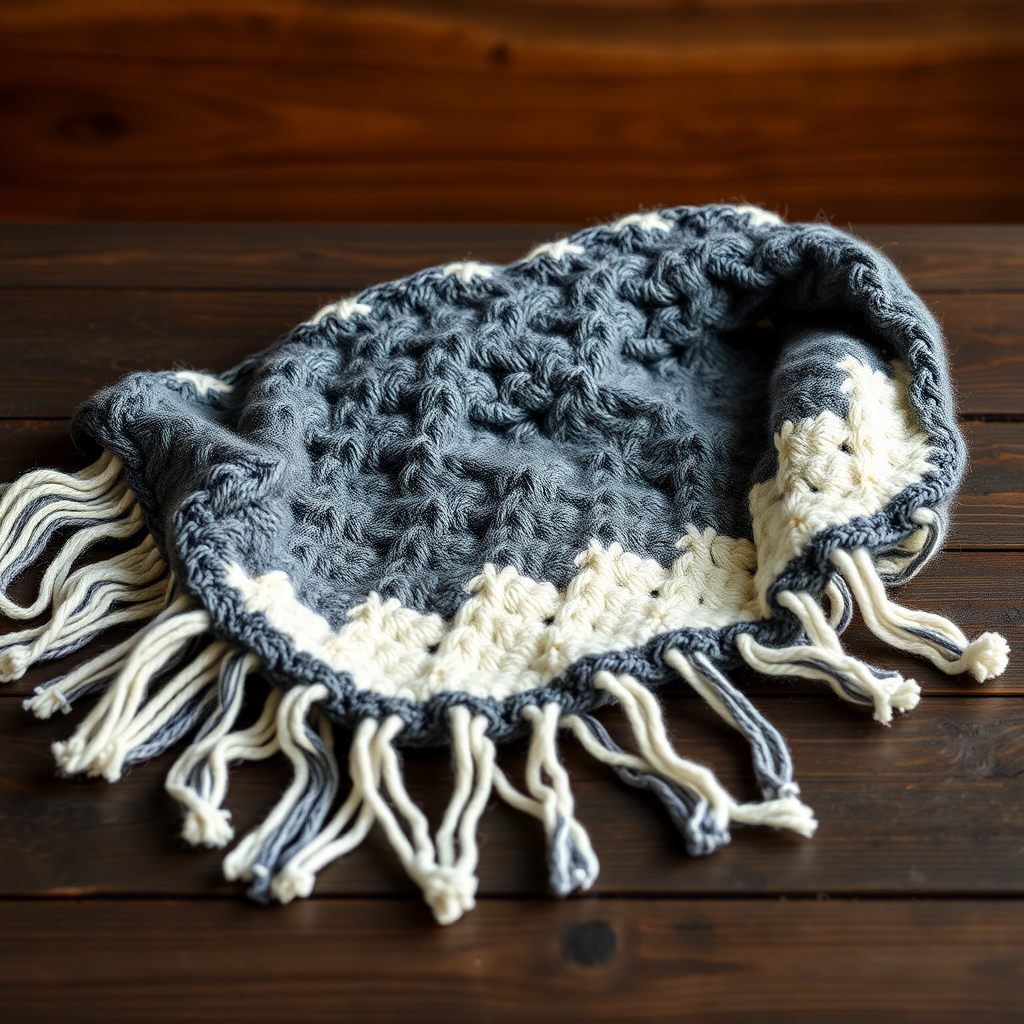
Master the elegant Herringbone Double Crochet stitch with this comprehensive tutorial, creating a stunning, drapey wrap that's perfect for layering. This pattern guides you through the unique stitch technique to produce a fabric that mimics woven tweed, ideal for showcasing tonal or variegated yarns. The result is a modern, cozy, and sophisticated accessory that looks like woven fabric rather than traditional crochet—perfect for beginners and intermediate crocheters alike.
Materials Needed
- Yarn: Worsted weight (#4) yarn, approximately 600-700 yards. Sample uses Lion Brand Wool-Ease in 'Fisherman' (cream) and 'Charcoal' (dark grey) held double for a tweed effect.
- Hook: Size J/10 (6.0 mm) crochet hook, or size needed to obtain gauge.
- Gauge: 14 herringbone double crochet stitches x 8 rows = 4 inches (10 cm) in pattern. Exact gauge is not critical for this project, but consistency is key for drape.
- Other: Yarn needle for weaving ends, scissors, optional fringe materials (12-inch strands of yarn).
Step-by-Step Instructions
Understanding the Herringbone Double Crochet (HHDC) Stitch
The Herringbone Double Crochet (HHDC) stitch is worked similarly to a standard double crochet, but with a unique yarn-over and insertion that creates a slanted, woven look. To work HHDC:
- Yarn over.
- Insert hook into the stitch.
- Yarn over and pull up a loop (3 loops on hook).
- Yarn over and pull through the first loop on the hook (2 loops on hook).
- Yarn over and pull through both remaining loops.
This creates a stitch that leans to the right, giving the fabric its distinctive herringbone texture.
Foundation Chain
Chain 30 (or any even number for desired width). For a wrap approximately 18 inches wide, 30 chains is ideal. If you want a wider or narrower wrap, simply chain an even number of stitches.
Row 1
- HHDC in the 3rd chain from the hook (the skipped chains count as the first HHDC).
- HHDC in each chain across.
- Turn your work. (29 HHDC total, including the turning chain as a stitch)
Row 2
- Chain 2 (this counts as the first HHDC of the row).
- Skip the first stitch (the one directly below the chain 2).
- HHDC in each stitch across, working the last HHDC into the top of the turning chain from the previous row.
- Turn.
Rows 3-150
Repeat Row 2 until the wrap measures approximately 60 inches (152 cm) in length, or desired length. For a standard scarf, aim for 60-70 inches; for a shorter wrap, stop at 50-55 inches. Count your rows periodically to ensure consistency—each row should have 29 HHDC stitches.
Finishing
- Fasten off by cutting the yarn, leaving a 6-inch tail. Pull the tail through the last loop on the hook and tighten.
- Weave in all ends using a yarn needle, threading the tails through the back of the stitches to hide them securely.
- Block lightly to open up the stitches and enhance the herringbone texture. To block, wet the wrap with cool water, gently squeeze out excess (do not wring), lay flat on a towel, and shape to desired dimensions. Allow to dry completely.
- For a more defined edge, you can add a single crochet border around the entire wrap: work 1 sc in each stitch along the top and bottom edges, and 2 sc in each row end along the sides. Join with a slip stitch to the first sc, fasten off, and weave in ends.
Optional Fringe
- Cut yarn strands of 12 inches (30 cm) each. You'll need approximately 30-40 strands for each short end, depending on desired fullness.
- Fold 2 strands in half to create a loop.
- Insert the crochet hook through the edge stitch from front to back.
- Hook the folded loop and pull it through the edge stitch, creating a new loop on the front side.
- Pull the loose ends of the strands through the loop and tighten gently.
- Repeat across both short ends, spacing fringe every 1-2 stitches.
- Trim fringe evenly to desired length (typically 4-6 inches from the edge).
Your Woven Herringbone Wrap is complete! Enjoy the modern, textured look that mimics woven tweed, perfect for layering over coats or wearing as a statement piece. The soft drape and sophisticated stitch pattern make this a timeless accessory you'll reach for again and again.