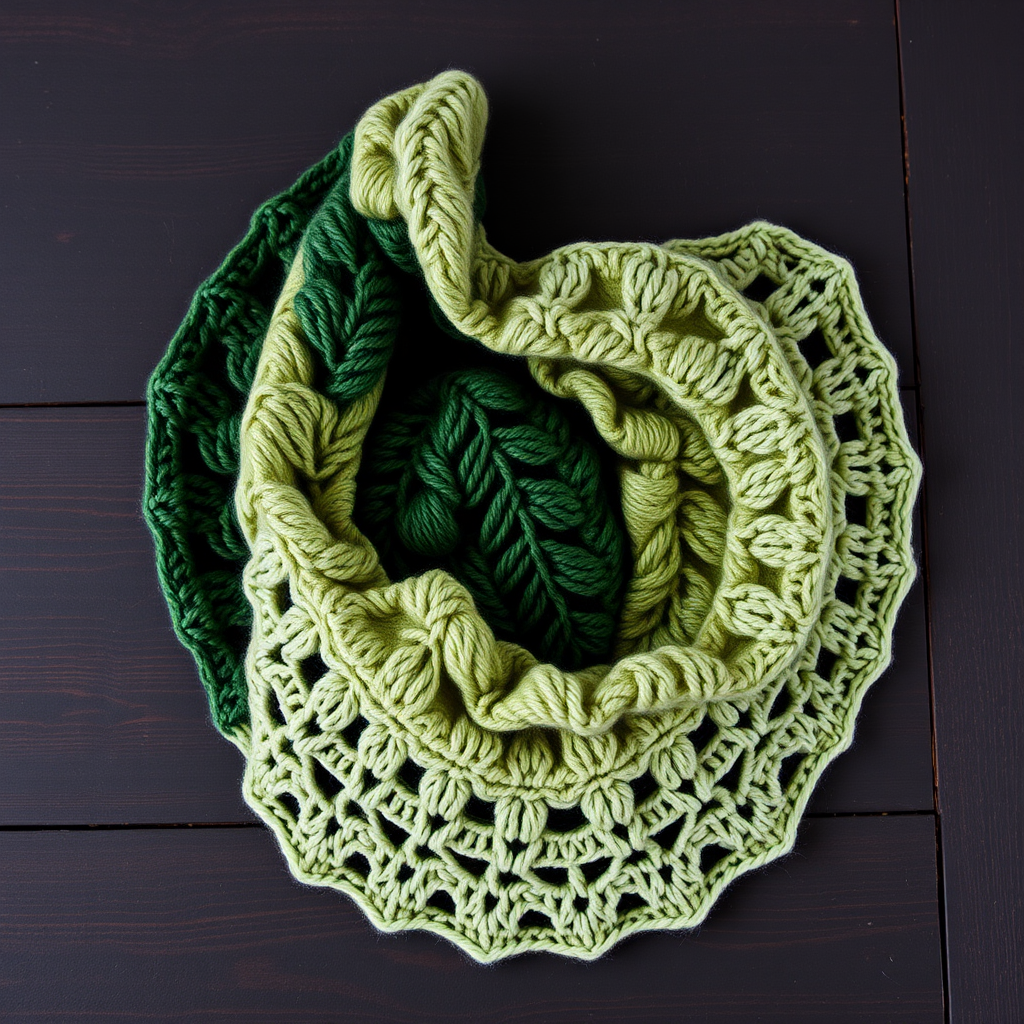
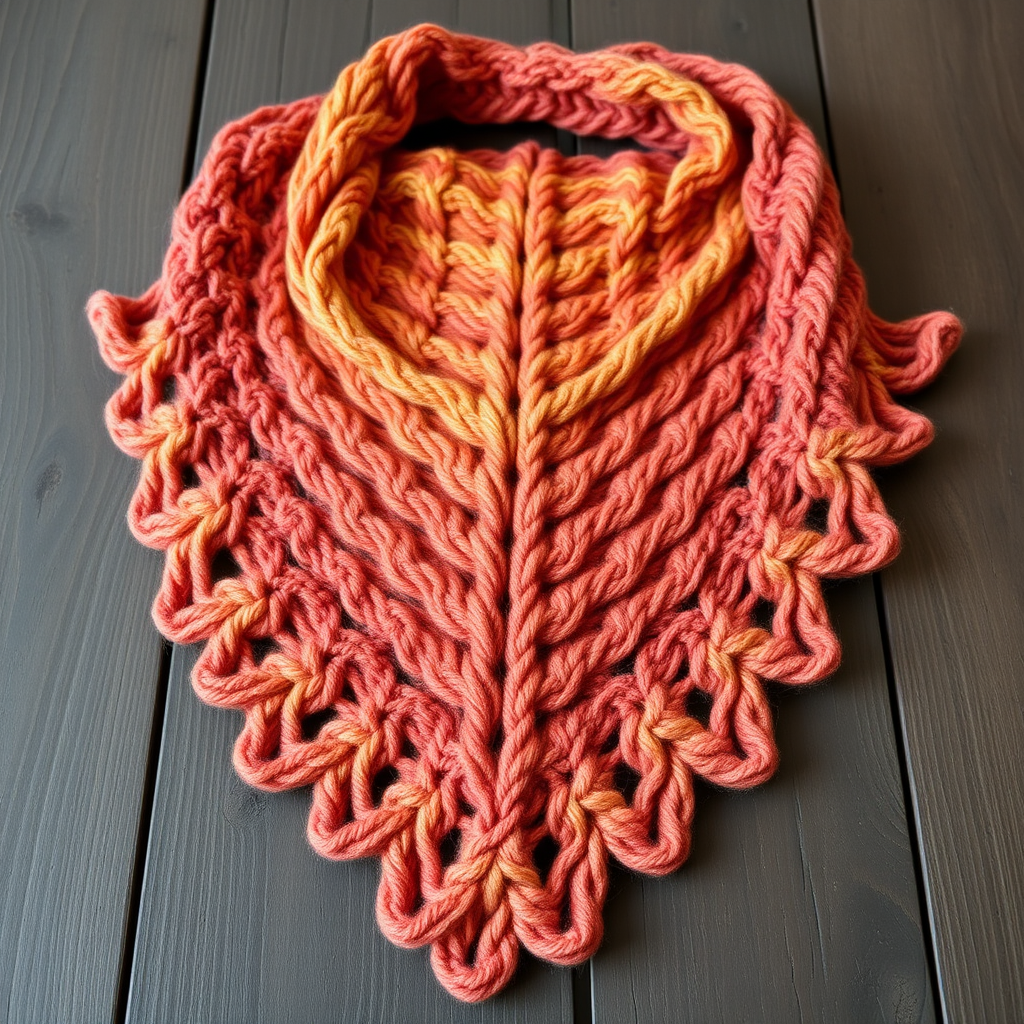
The Meadowlark Drift Shawl Free Pattern – A Knitted Asymmetrical Wrap with Cascading Leaf Lace

The Meadowlark Drift Shawl: A Free Knitting Pattern for a Cascading Leaf Lace Wrap
Wrap yourself in the softest whisper of spring with this asymmetrical knitted shawl, where delicate leaf motifs drift across a gradient of sage, cream, and blush. The gentle crescent shape drapes beautifully over any shoulder, making it the perfect layering piece for cool evenings. This free pattern is designed for knitters who are ready to explore lacework while creating a stunning, wearable piece of botanical art.
Whether you're a seasoned lace knitter or a confident beginner looking for a challenge, the Meadowlark Drift Shawl offers a rewarding project with clear, written instructions. The cascading leaf pattern is surprisingly simple once you get into the rhythm, and the color transitions create a truly unique, handcrafted garment that will be treasured for years.
Materials Needed
Before you begin, gather the following materials to ensure a smooth knitting experience. The quality of your yarn will greatly affect the final drape and feel of your shawl, so choose a soft, high-quality fingering weight yarn.
Yarn
- Color A (Sage Green): 350 yards of fingering weight yarn
- Color B (Cream): 300 yards of fingering weight yarn
- Color C (Blush Pink): 250 yards of fingering weight yarn
- Suggested Yarn: Malabrigo Sock or similar soft, plied fingering weight yarn
Needles & Notions
- Knitting Needle: US 6 (4.0 mm) circular knitting needle, 32-inch or longer (to accommodate the growing number of stitches)
- Stitch Markers: At least 4 removable stitch markers
- Yarn Needle: For weaving in ends
- Blocking Mats & Pins: For finishing and shaping the shawl
Gauge
20 stitches and 28 rows = 4 inches in stockinette stitch (blocked). Gauge is important for achieving the correct size and drape, so take a moment to knit a swatch and adjust your needle size if necessary.
Step-by-Step Instructions
This shawl is worked from the top center down, increasing on both sides to create an asymmetrical triangle shape. The leaf lace pattern is written out clearly for each row. Follow along carefully, and you'll see the beautiful botanical pattern emerge.
Abbreviations
- k = knit
- p = purl
- yo = yarn over
- k2tog = knit two together (right-leaning decrease)
- ssk = slip, slip, knit (left-leaning decrease)
- kfb = knit front and back (increase)
- pm = place marker
- sm = slip marker
- st(s) = stitch(es)
Special Stitch – Leaf Lace Pattern (worked over 8 stitches)
This 12-row pattern creates the cascading leaf motif. The yarn overs (yo) create the holes, while the decreases (ssk and k2tog) shape the leaf. Note that on the wrong side rows, the yarn overs create new stitches that are purled.
- Row 1 (RS): k2, yo, ssk, k4
- Row 2 (WS): p6, yo, p2 (note: yo creates a new stitch)
- Row 3: k3, yo, ssk, k3
- Row 4: p5, yo, p3
- Row 5: k4, yo, ssk, k2
- Row 6: p4, yo, p4
- Row 7: k5, yo, ssk, k1
- Row 8: p3, yo, p5
- Row 9: k6, yo, ssk
- Row 10: p2, yo, p6
- Row 11: k7, yo, ssk (note: ssk uses the last 2 sts of the leaf and the first st of the next section)
- Row 12: p1, yo, p7
Setup Section
We begin by creating the top edge of the shawl and establishing the increases that will shape the asymmetrical triangle.
- With Color A, cast on 3 stitches.
- Row 1 (RS): kfb, k1, kfb (5 sts)
- Row 2 (WS): k2, p1, k2
- Row 3: kfb, k1, yo, k1, yo, k1, kfb (9 sts)
- Row 4: k2, p5, k2
- Row 5: kfb, k2, yo, k1, yo, k2, kfb (13 sts)
- Row 6: k2, p9, k2
- Row 7: kfb, k3, yo, k1, yo, k3, kfb (17 sts)
- Row 8: k2, p13, k2
- Row 9: kfb, k4, yo, k1, yo, k4, kfb (21 sts)
- Row 10: k2, p17, k2
- Row 11: kfb, k5, yo, k1, yo, k5, kfb (25 sts)
- Row 12: k2, p21, k2
Begin Leaf Lace Section
Now we'll introduce the leaf lace pattern. The markers will help you keep track of the two 8-stitch leaf sections and the center stitch that separates them.
- Row 13 (RS): kfb, k1, pm, *work Leaf Lace Row 1 over next 8 sts, pm, k1, pm, work Leaf Lace Row 1 over next 8 sts, pm, k1, kfb (29 sts)
- Row 14 (WS): k2, p to last 2 sts, k2 (work Leaf Lace Row 2 on the 8-st sections between markers)
- Row 15: kfb, k to marker, sm, work Leaf Lace Row 3, sm, k1, sm, work Leaf Lace Row 3, sm, k to last st, kfb
- Row 16: k2, p to last 2 sts, k2 (work Leaf Lace Row 4 on sections)
Continue in this manner, working the Leaf Lace pattern on the 8-stitch sections between markers, and increasing 1 stitch at each edge (kfb on first and last stitch) every RS row. The center stitch between the two leaf sections is always knit on RS and purled on WS.
Work Rows 1-12 of the Leaf Lace pattern once, then repeat Rows 1-12 for each subsequent leaf repeat. After completing 3 full repeats of the Leaf Lace pattern (36 rows total in this section), you will have approximately 101 stitches.
Color Transition
Now we'll introduce the beautiful gradient effect by switching colors while maintaining the established pattern.
- Switch to Color B (Cream) and continue in the same pattern for 3 more full repeats of the Leaf Lace pattern (36 rows). You will have approximately 177 stitches.
- Switch to Color C (Blush Pink) and continue in the same pattern for 2 more full repeats of the Leaf Lace pattern (24 rows). You will have approximately 225 stitches.
Edging
The eyelet border adds a delicate, scalloped finish to the shawl. This simple lace edging complements the leaf pattern beautifully.
- Row 1 (RS): kfb, *k1, yo, k2tog, repeat from * to last 2 sts, k1, kfb
- Row 2 (WS): k2, *p1, yo, p2tog, repeat from * to last 2 sts, k2
- Row 3: kfb, *k2, yo, ssk, repeat from * to last 3 sts, k2, kfb
- Row 4: k2, *p2, yo, p2tog, repeat from * to last 3 sts, k2
- Row 5: kfb, *k3, yo, k2tog, repeat from * to last 4 sts, k3, kfb
- Row 6: k2, *p3, yo, p2tog, repeat from * to last 4 sts, k2
- Row 7: kfb, *k4, yo, ssk, repeat from * to last 5 sts, k4, kfb
- Row 8: k2, *p4, yo, p2tog, repeat from * to last 5 sts, k2
- Bind off loosely in pattern (knit the knits and purl the purls).
Finishing
Proper blocking is essential to open up the lace pattern and achieve the beautiful drape this shawl is known for. Don't skip this step!
- Weave in all ends using a yarn needle, being careful not to pull too tightly.
- Soak the shawl in lukewarm water with a gentle wool wash for 20 minutes.
- Gently squeeze out excess water (do not wring or twist).
- Lay flat on a towel and roll up to remove more water.
- Pin out to shape on blocking mats, stretching the leaf lace sections to open up the pattern. Pay special attention to the points of the leaves and the scalloped edge.
- Allow to dry completely before unpinning. This may take 24-48 hours depending on your environment.
Once dry, your Meadowlark Drift Shawl is ready to wear! The gradient of sage, cream, and blush creates a stunning visual effect that will draw compliments wherever you go. This shawl makes a wonderful gift for a loved one or a beautiful treat for yourself. Happy knitting!