Aurora Dune Shawl Free Pattern – Gradient Ombre Knit Wrap

The Aurora Dune Shawl: A Beginner-Friendly Gradient Ombre Knit Wrap
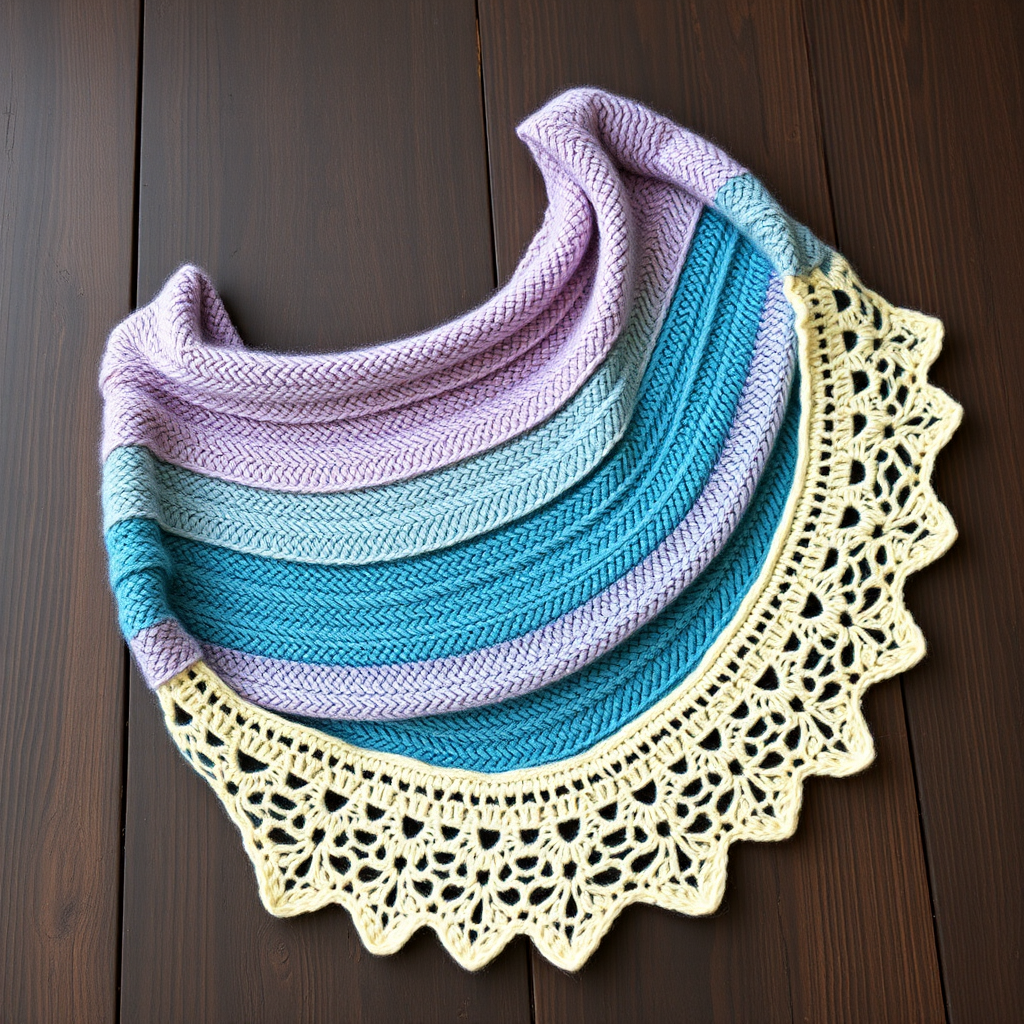
Imagine wrapping yourself in the warm hues of a desert sunset, where terracotta melts into dusty rose and finally deepens into a tranquil teal. That's the magic of the Aurora Dune Shawl—a stunning gradient ombre knit wrap that's as soothing to create as it is to wear. This free knitting pattern is designed with beginners in mind, using simple increases and a delicate lace edge to create a professional-looking piece. The soft, airy texture and gentle waves of color make it a versatile layering piece for any season, whether draped over a summer dress or cozied up with a winter sweater. Let's dive into this rewarding project that will have you proudly showing off your handmade masterpiece.
Materials Needed
Before you begin, gather these supplies to ensure a smooth knitting experience. The beauty of this pattern lies in its simplicity—you only need a few items to create something truly spectacular.
- Yarn: Fingering weight yarn in 3 colors (Color A: 350 yds, Color B: 350 yds, Color C: 350 yds). Suggested: Malabrigo Sock in 'Piedras' (terracotta), 'Candombe' (dusty rose), and 'Teal Feather' (deep teal).
- Needle: US 6 (4.0 mm) circular knitting needle, 32-inch or longer (to accommodate the growing number of stitches).
- Notions: Stitch markers, tapestry needle for weaving in ends, blocking mats and pins.
- Gauge: 20 stitches and 28 rows = 4 inches in stockinette stitch (blocked). Gauge is important for achieving the correct drape and size, so take a moment to swatch!
Step-by-Step Instructions
This shawl is knit top-down in a triangular shape, with a simple lace edge. The gradient effect is achieved by knitting stripes of color that gradually shift from one to the next. Don't be intimidated by the lace—it's a simple repeat that becomes rhythmic in no time.
Abbreviations
- k = knit
- p = purl
- yo = yarn over
- k2tog = knit two together
- ssk = slip, slip, knit (decrease)
- pm = place marker
- sm = slip marker
- st(s) = stitch(es)
Setup: Casting On and Foundation Rows
Using Color A, cast on 3 stitches. This tiny beginning will blossom into a grand shawl.
- Row 1 (WS): Knit all stitches.
- Row 2 (RS): K1, yo, k1, yo, k1 (5 sts).
- Row 3: Knit all stitches.
- Row 4: K1, yo, k1, yo, k1, yo, k1, yo, k1 (9 sts).
- Row 5: Knit all stitches.
You've just created the foundation—notice how the yarn overs create the initial increases that will shape the triangle.
Increase Section: Building the Body (Color A)
Now we'll establish the main pattern. The shawl features a garter stitch border (3 stitches on each edge) with a stockinette body, and increases are worked 2 stitches in from each edge.
- Row 6 (RS): K3, yo, k to last 3 sts, yo, k3 (increase 2 sts).
- Row 7 (WS): K3, p to last 3 sts, k3.
Repeat Rows 6-7 until you have 99 sts on the needle, ending with a WS row. You will have used approximately 1/3 of Color A. The garter edge keeps the shawl from curling, while the yarn overs create the gentle increases that widen the fabric.
Color Transition 1: Introducing Color B
Cut Color A, leaving a 6-inch tail. Join Color B with a simple knot or by knitting the first stitch with both yarns held together for a secure join.
Continue repeating Rows 6-7 (the increase rows) until you have 165 sts on the needle, ending with a WS row. You will have used approximately 1/2 of Color B. The color shift begins subtly, creating that beautiful ombre effect.
Color Transition 2: Introducing Color C
Cut Color B, leaving a tail. Join Color C. Continue repeating Rows 6-7 until you have 231 sts on the needle, ending with a WS row. Cut Color C, leaving a long tail (about 12 inches) for weaving in later.
Lace Edge: Adding Delicate Detail
Now for the pièce de résistance—the lace edge. This simple repeat of yarn overs and decreases creates a delicate, airy border. You'll be working in Color C with the remaining yarn.
- Row 1 (RS): K3, yo, *k2tog, yo, k1, yo, ssk, yo* repeat from * to * until last 3 sts, yo, k3 (increase 2 sts).
- Row 2 (WS): K3, p to last 3 sts, k3.
- Row 3 (RS): K3, yo, *k2tog, yo, k1, yo, ssk, yo* repeat from * to * until last 3 sts, yo, k3.
- Row 4 (WS): K3, p to last 3 sts, k3.
Repeat Rows 1-4 until you have used all of Color C, ending with a WS row. You should have approximately 279 sts. The lace pattern creates a scalloped effect that will really shine after blocking.
Bind Off: The Picot Edge
This decorative bind-off gives the shawl a finished, professional look with tiny scalloped points.
With RS facing, bind off loosely as follows: K2, *slip the stitch back to the left needle, cast on 2 stitches, bind off 4 stitches* repeat from * to * until all stitches are bound off. Cut yarn and weave in ends.
Tip: Bind off very loosely to maintain the stretch and drape of the lace edge. If you tend to bind off tightly, consider going up a needle size for this step.
Blocking: The Final Transformation
Blocking is essential for this shawl—it opens up the lace, evens out the stitches, and creates that beautiful crescent shape.
- Soak the shawl in lukewarm water with a gentle wool wash for 20 minutes.
- Gently squeeze out excess water (do not wring—this can felt the wool).
- Lay flat on a blocking mat, pin out the edges to create a crescent shape, and allow to dry completely.
- Pin the picot points to accentuate the scalloped edge.
Once dry, your Aurora Dune Shawl is ready to wear. The gradient ombre effect will be fully visible, and the lace will drape beautifully.
This pattern is a joy to knit—the rhythmic increases are meditative, and watching the colors shift is deeply satisfying. Whether you're new to knitting or a seasoned pro looking for a relaxing project, the Aurora Dune Shawl is a beautiful addition to your handmade wardrobe. Happy knitting!